Last week I was really really unlucky. After a long day, last Tuesday, I finally got home in the evening but soon after, started shivering like a mad man ... and it was the start of three damned days locked up in my room at home due to a sinus infection. But in those three days, which I wasted just watching movies ... a LOT of movies, read a bit from a book .. .and the rest just had nothing to do except think. And the thought that was hogging most of the area in my brain was about the boredom that struck as soon as I couldn't do any of the other stuff with which usually I fill my day. And that got me thinking, about how that even though that we complain a lot about work and most of our daily chores, without them we would actually be much much worse.
What's wore than waiting for an entire day to pass just looking at the whitewashed ceiling of a room while on a freakin' bed! At least, when you go to work, or to some random boring lecture at university, or even just do something that normally we'd consider as annoying, time is passing quicker and you;d be able to say that you did something at the end. And I realized that even though we all complain about work and stuff, without we'd all be more lost than not.
Several philosophers, and eventually psychologists, came to the conclusion that humans need a reason to live, and the very basic reason is to do something satisfactory with one's life. The feeling of being able to say "Yes, I did that." no matter how trivial it is, at least you got a purpose in life, and no matter how small, one would have made something with their own existence. Even by itself, work keeps up fit and mentally healthier than others who do not do anything. In Maltese we say "ix-xogħol salmura tal-ġisem" or "work is the body's preservative" ... but then I also have to admit how that saying ends in "imma l-għażż, balzmu tal-Madalena" which translates to "but lazyness is life's sweet nectar".
Anyways, all I'm trying to say is that, unlike a few days ago, I realised the importance of keeping busy and doing something useful with oneself rather than stay there and do nothing! It keeps you sane ...
It has been an amazingly hectic week, and only now I got some time to sit down and write something. Actually its been since this morning that I've been looking at the blank screen on my laptop for more than a couple of hours, trying to think of something to write about, and I seriously could not get any ideas, until a little earlier. It just occurred to me that it is nice to waste time and do nothing, occasionally. Probably you are thinking that I am just a teeny weeny crazy for saying so, since a few weeks ago I was iterating and re-iterating in my previous blog posts, that one should not waste time ... and seize the day .. and so on and so forth ... bla bla blah ...
However, after having an extremely long week, jam packed with lectures, assignments, lab sessions, thesis work and a billion other academic activities and tasks to do, I felt like my brain needed a break from everything and just enjoy the simplicity of doing nothing and having an actual break. Even the usual television series that I usually follow, felt like too much to handle and I just wanted to lie down on my bed and do nothing. But how did we end up having such ahectic life style?
Usually after the kind of question I just asked in the paragraph above, I'd write something meaningful, such as historical origins; where, who and why came up with a particular notion. Today, I honestly do not have any answers. I tried looking up such stuff, but I failed miserably. I have to admit I have spent the entire day trying to come up with something that makes sense, and after that I ate lunch, took a nap, went to Ryan's Pub for some quality time with my friends, look at them on the photo on the right; and came back ... and I think I'm on to something.
I honestly am not sure if its only me or everyone else, but I have to admit that the reason why I jam-pack my schedule with more tasks to do than it is humanly possible to perform, is because I am scared of being alone and doing nothing. But what do I mean by scared and alone? Its not that I am terrified of the dark, or anything on those lines; its just that the idea of being in a quiet place by myself, and thus being able to listen to my inside voice (which some people call conscience) scares me. And this only means one thing, that I did, or am doing, something wrong, that deep down I know that I shouldn't have done. What this thing is, its actually irrelevant, all I know is that its there and that I should deal with it, deal with myself.
On my way back here from Ryan's Pub tonight, I was alone in my car and for once I didn't put on any music, which gave me some time to think about what is really going on in my life. And I realised what its actually so terrifying. Its not the silence, it not something I did in the past, be it a long time ago or recently, its just that I do not have any guarantee about what's going to happen in the future. Up till now, whether I admit or not, my life was quite planned out ... primary school, followed by secondary school, followed by sixth form, followed by university ... but now, now that I am in my final year at university, what's next?
I'd like to say that I know what's about to happen next ... but the truth is that I do not have a fuckin' clue. Maybe a Master's degree, maybe not ... maybe abroad, or maybe here in Malta ... who knows? And I have to admit, I'd rather "die" of doing a lot of things, that not know what's going to happen next, but then again, we aren't supernatural beings to know what's going to happen in the future, and just have to accept that fact, whether we like it or not. I've been honest today, about what's really scaring me right now in my life ... and what about you? Is the future scaring you .... ?
I think it has happened to all of us when a simple problem is sometimes misunderstood by anyone, even ourselves, and instead of finding the simple solution, one would deliberate about the problem and what to do about it for hours and days. And after a long time of deliberation, to avoid making a rash decision and risk making the situation worse, one would eventually realize that the best solution would have been the simplest one since the problem itself would not have been as half as complicated as on thought. And that is it, usually when we are faced with a problem we tend not to analyse the problem, but to over-analyse ... and make it look bigger than it actually is ... and exaggerate ... and imagine problems where there aren't ... and panic!
One of the subjects I am studying at university is the science of how to apply mathematical models to basically anything we see around us every day and thus, study and analyse how the particular object or action behaves over space and time, using such mathematical models. And similarly to dealing with everyday problems, one can do the same kind of mistake in this subject, when considering to many details that affect a behaviour or process or object, than what is actually needed and thus complicating the math too much. And it was then when the lecturer told us about how to "keep things simple" in an eloquent way, quoting William of Ockham.
It was in the early 14th century, that the English friar, theologian and philosopher, William of Ockham, the weird looking dude shown in stained glass on the right, came up with a simple concept that is actually to deal with problems. Born in Ockham, Surrey, in the year 1287, he joined the Franciscan friars at a very young age, and studied theology at the University of Oxford. He was a very good scholar at the time and was given the nickname of Doctor Invincibilis, or Unconquerable Teacher as it is translated to English. After several arguments with the pope of the time, he was accused of heresy because of some of his ideas, and eventually was excommunicated.
"Numquam ponenda est pluralitas sine necessitate". Plurality must never be posited without necessity. That rather complex sentence with big words, translated from Latin, only means that we should shave-off everything that is too complicated, but not what it is necessary, before dealing with a problem. And that line of thought is known as Occam's Razor. By the way, I honestly have no clue why it is referred to as "Occam" when it is clearly documented by historians that William was from "Ockham". I guess there was a typo along the way which nobody actually felt like ever fixing. And its makes perfect sense, why consider all the complications of the world where we can deal with the simple parts of a problem to solve it anyway? But then, we should also not over-simplify anything. Occam's razor specifically says to not include complications, but this holds only as long as they are not necessary. Later on, after the time of William of Ockham, other philosophers and mathematicians, such as Isaac Newton and Bertrand Russell, asserted the same school of thought, and the principle is still used today in philosophy and mathematics.
And I, even though I am a nobody, believe that the same principle can be applied into use for every day life. Everyday we are faced with a ton of problems, most of which are trivial and solvable in seconds, however others would be quite a challenge to deal with them. Tackling a problem is a very good thing, rather than leaving it to accumulate with others that one would haven't dealt with. Yet the most important is not to panic, as this robot on the left is telling you, and the simpler one keeps said problem, the easier it will be to deal with it!
P.S.: Sigur Rós's music video of Hoppípolla below has nothing to do with Occam's Razor, its just that the song is awesome and I wanted to share it somewhere else rather than the usual Facebook and Twitter. :-)
I grew up in this small town in the south of this island, with a population of less than 19,000 people, where we got more Italian channels on TV rather than local ones, where everyone knew everything and/about everyone else in town, and also where different stores were still catering for different items and the first supermarket didn't open up before I was at least ten years of age. We had (and still have) a couple of grocery stores, a computer store, a pharmacy, a couple of clothes stores, so on and so forth. And if anyone needed anything, they'd just go to the store that sold it ... it cannot really get simpler than this.
However, something quite interesting that happened to me last week. I was working on my laptop when my mother told me how she needed to buy a particular shampoo. I also realised that it is high time I bought a mouse for my laptop, and also a new pair of jeans. The thing is, if it were fifteen years ago one would absent mindedly just head out the door, go around town to the different stores, buy the stuff and head back home. However, even though that roughly the same stores that were open in town fifteen years ago, are still open today, instead of all of this, I just opened a new tab in my web browser ... hit a couple of keys on my laptop ... eBay, Amazon, ASOS ... and after entering the magic 16-digit number, it was done. And this morning, I woke up to find everything delivered to my door step.
I'm sure everyone has done the above more than just once or twice, it has become the norm and one of the most common things to do without even thinking about it. But no one can ignore the fact that the dynamics of society are changing, where a lot of people do not go out to the store any more but simply buy their stuff online and have it delivered. And with that, the contact with the outside world is always being more and more restricted ... at the store, one would run into the neighbour or an acquaintance and exchange a couple of words, but now, the most communication one would have if they would be on Facebook chat with someone else while shopping online. We all agree that society is changing, due to various reasons mainly the development of new and better technologies for everyday use. All over the world, people are calling this progress, but is it truly progress? Are we going for the better, or for the worse?
During last week's edition of Swag FM, my friends played a particular song that made me think more about all of this. Cerco un centro di gravita` permanente, che non mi faccia mai cambiare idea sulle cose sulla gente ... that is what the sixty eight year old, Italian artist, Franco Battiato, sings in his 1982 single Centro di Gravita Permanente. For all the non-italian speaking people reading this post, that translates to "I am looking for a permanent centre of gravity, that doesn't ever shift my opinion of thing and people". But in modern day society, one does not simply do that. We're in a society that is constantly changing and as a result, it becomes quite difficult to establish such a centre of gravity. Was Franco Battiato aware that society had started to change back then when he was writing the lyrics for his song?
With the development and evolution of the internet and wireless devices in the past few years, nowadays its all about being connected. Adverts are not seen on the TV, radio and the newspaper only, but on web pages as well. And a lot of money is spent so that one does not see random adverts on the internet, but only adverts regarding items of interest. People no longer gather outside a store and look at items and ask for advice about it in person; but now all of this happens online and reviews are read on fora while the items are rated on the sales websites.
This also limits the amounts of human-to-human contact one used to have when buying something, now everything is done on a laptop and contact with anyone else is basically zero. The internet has brought us closer together, creating a global village, in which people are only a couple of reception bars away on Skype from anywhere around the world and where thanks to networks like CNN and BBC, nowadays news travels faster than ever before, crossing the world in just a matter of minutes. People from all over the world do not develop in different ways their society but since we are connected to one single network, society's ideas are becoming more and more the same all over the world. And its not only ideas, even businesses and sport and products ... one can find the McDonalds, football (or soccer for people on the other side of the Atlantic pond) and the iPod all over the globe.
So in what can we fix our respective centre of gravities, that does not shift our opinion on things and people? A few years ago, people did not need to do anything of the sort since the traditions and norms of their respective societies rarely changed, and when they did ... change was very slow. But now it is not so any more and because the norms and values of modern day society are changing rapidly, some people try to fix their centre of gravities in religion, others in the love and the relationships around them, while others do so in their personal experiences that might have had a big impact on them through out their life ... in my case, like Franco Battiato, I am still looking for something, to anchor me down and to fix my opinions and views about things and people so that they do not change with the values of society. And what about you ... do you have a permanent centre of gravity ?
As some of you might know, I am quite a big fan of electronic music, in particularly techno, electro, house and similar genres. A couple of months ago, 3rd August to be exact, was this long awaited night in which a party featuring the local legend Junior B was held. Like me, many of my friends were really excited and in the few days before the party, we had a group chat on Facebook where most of us were posting several links from YouTube containing some cool tracks. One of the links was LFO's remix of T. Raumschmiere's, "Querstromzerspaner". Yes, the word actually is querstromzerspaner. I am emphasising this because the idiot of a spell checker on my laptop is constantly underlining the word in red, and asking me whether I want to write "neurotransmitter" instead. Anyway, I have to admit, I had never heard the track before but I immediately loved it, and was fascinated by what the word actually meant. The thumbnail on YouTube only had the image of a nuke being detonated which kept changing colour from one hue to another. Here you go, you can listen to the track from the YouTube link below. Just a heads up, not all readers will appreciate this track due to its particular genre.
Curiosity killed the cat, they say, and even though it did not kill me, it sure did a hell of a job on me. I was seriously intrigued by what this word, which took me quite a while to learn how to pronounce, actually meant. And thank god for the Internet! T. Raumschmiere, whose actual name is Marco Haas, is a 38-year old German DJ, known for his aggressive electro-pop style. But I still haven't answered the original question, what on earth is a querstromzerspaner? ... the stupid spell checker is still obsessed with calling it a neurotransmitter. The answer is very simple, it is a grinding machine, like the one shown in the picture on the left of the paragraph below. Stuff, usually rubbish, is thrown in and then it comes out from the other side, shredded into tiny pieces. This brute of a machine is able to grind nearly anything one can imagine to dust.
So why on earth would one name a music track after a grinding machine? I think I can actually understand that. Well, I am 100% positive that we all sometimes feel really really frustrated and angry, due to various reasons, and would want to make a massacre of anything in the path of our wrath. It could be either a crappy day at work, or some bad news would have arrived or even just someone around us would get on our nerves and make us see red. And thank god that none of us are the same and there is diversity among us, and as some people would let go of their nerved by having a smoke or going for a jog or do some sport, others like me would vent their frustration and nerves in music, whether its just listening to it or even making it.
The destructive side of the idea where a grinding machine turning everything that is thrown into it to tiny bits and pieces certainly appeals to a lot of people, with myself being one of such a crowd. But one must not let their nerves and anger take control over them, but actually the other way round, people should be in control of their emotions, anger and nerves. And eventually it all boils down to those two simple words, anger management. Nearly all of the anger management programmes offered in society revolve around the idea to channel the negative emotions and use them to make something constructive and positive. If only that would happen, a lot of the violence occurring in the world around us would certainly become obsolete.
And to conclude I just have a final question/suggestion, the next time you feel frustrated and angry why not listen to some hard music, and channel the anger to make something constructive out of it, instead of just make a scene or try to destroy anything in your path? Do not be a querstromzerspaner!
"Both Quincy and Quintin knew the answer to quite a good quantity of the questions during a quiz at the end of a quest in front of the queen, when suddenly they started quarrelling. They were told to quench the quarrel, since they were already in the final quadrant of the quiz, after a long queue. The prize was a beautiful quartz watch, which none of them won because they were told to quit the quest because of the quarrel."
OK fine, you got me, I just came up with the above story and I have to admit that it truly is horrible and lame. But what do you think is the point of that lame paragraph? Fifteen ... I have used fifteen different words starting with the letter Q. And what one can notice, its that every time the letter is used in the English vocabulary, it is always followed by a U.
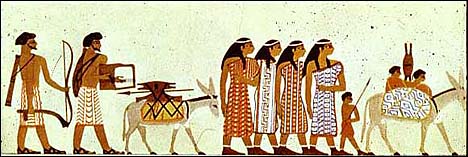
Q, the seventeenth letter of the English alphabet, has its origins in the Semitic languages of North Africa. the letter itself represents the sound of /kw/. However, even if the pronunciation of this sound did not require a lot of effort from the nomadic Semites of the Sahara, this gave quite a bit of trouble to the Greeks and Romans who later on invaded the area. The Greeks came up with the koppa, Ϙ, to represent that sound with one letter, but later on the Romans needed a digraph, a pair of letters representing a single sound, to do so.
And so they came up with QV, which when translated from Latin to modern day English, it becomes QU. No, its not the ququ quuquuuu that the rooster crows every morning at sunrise; in this case, the U helps to "round" the vowel and makes it less hard to pronounce. This digraph was then passed on from Latin to the more modern romantic languages, in this case, the French language, and when in the peak of the middle ages the French-speaking Normans invaded England and ruled over it for the next couple hundred years, the QU was passed on from French to English together with several other words.
And as hundreds of years have gone by, the letter Q has become an integral part of the Latin (now English) alphabet, and so has the norm of it being always followed by a U and except for the words borrowed from Semitic languages, and acronyms that eventually became words, such as QWERTY, it remains that every time a Q is used, it is followed by a U.
So, a couple of weeks ago, I was at a friends place and amid all of the fun and crazy things that were going on in the pool and all over the place, I decided to play a couple of board games. Many people, mostly Americans, know it as checkers, however I prefer to call it by its British name, draughts. The modern day version of the game is quite old actually, with the English author William Payne writing a book about the board game in the year 1756. However, 257 years is actually not a long time when realizing that around the year 3000BC, yes, more than 5000 years ago, in the city of Ur in Ancient Mesopotamia, there were already games similar to modern day draughts, and they were played on the same kind of board as the one used in draughts. Well, nobody was actually there to confirm all of this but archaeologists are quite sure of the remains that they have unearthed.
While playing the second or third game, it dawned on me that there is no better definition of the phrase "for the greater good" than most of the strategies used in this game. This thought occurred to me when I had to kill a couple of my own pieces in order to be able to kill the opponent's pieces and eventually win the game. But the need for strategic decisions such as this one do not only occur in a simple board game, whether its just a business decision, a personal decision such as abortion or divorce, or a strategic decision to be taken by a general during a war. But is it justifiable to sacrifice a little for the greater good?
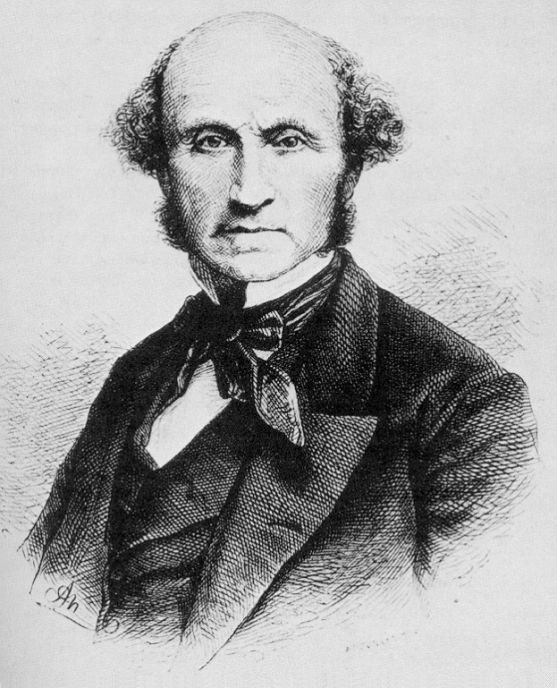
In ethics, this approach is called Utilitarianism, and it theorizes the fact that the course of action that maximizes happiness and reduces suffering the most should always be chosen when faced with an important decision. This idea has always been in the heads of basically everyone and always seemed to be the most logical path to follow while trying to make a sound decision, rather than acting rashly in the spur of the moment. But it was Jeremy Bentham ,with his long silvery hair as seen in his portrait on the right, and his book titled "An Introduction to the Principles of Morals and Legislation" in the late eighteenth century, and then followed by John Stuart Mill and his articles in Fraser's Magazine in 1861 that actually started exploring these theories and the philosophy behind them.
But is utilitarianism in itself acceptable as a modern way of thinking and making decisions? Along the years, several arguments have been made that it depends on the sacrifice in the particular situation that determines whether its morally acceptable to sacrifice and what for the greater good. Of course, the thought in itself, the sacrifice of something (or someone) for the greater good is remarkably noble. But should there be a limit for what one should be ready to sacrifice in order to obtain this greater good? Of course there should be! It was John Stuart Mill himself who, even though he had an extremely ridiculous hairstyle, said that "If all mankind minus one, were of one opinion, and only one person were of the contrary opinion, mankind would be no more justified in silencing that one person, than he... would be justified in silencing mankind." And in my opinion, that summarizes all of the ethical implications of the argument, that even though it is for the greater good, even if it is one man against the rest of mankind, his opinion is still valid and not even one human being should be sacrificed, for that human being has the same fundamental rights as all of the others.
And that is the limit, or boundary, that we were looking for, regarding that to sacrifice or not for the greater good. It is the involvement of another human being, especially when his or her life itself is at stake, that even though for the greater good, we are still exactly the same kind of human beings like the one in question, and if we do not want anyone or anything to judge us and have control over us, then we should not judge, or have control over the actions, or life, of someone else.
When I was writing the first post in this blog, I was really determined that I will do it regularly and that I would always post within a time-frame not longer than seven days. However, here I am, and it has been eight ... eight days since my last blog post! I am quite disappointed by myself, but to be honest I had a lot to do ... a meeting with my tutor regarding my thesis, an entire weekend out and also, ended up giving a tour around Sliema when some Indian friends came over to visit on holiday. But then again, I have to admit ... yep, I was procrastinating.
But come to think of it, this is not the first time that I, or any of us, have procrastinated. The entire exam period at the end of every semester, everyday at work, and even what it took me to write today's post (oops sorry), are very clear examples of procrastination. While procrastinating, randomly scrolling through meme after meme on the various sites one can find on the web, I realized that its not only me, but most of the students around the world, and actually, it is most of the people everywhere.
But what is that compels most people to leave for later what they could do now? First of all, we first have to understand the proper meaning of procrastination. Three leading psychologists defined procrastination in the Journal of Educational Psychology as a counter-productive, needless and delaying activity. Following that, in 2007, Steel reviews these definitions "to voluntarily delay an intended course of action despite expecting to be worse off for the delay", although I'm quite sure that everyone reading this blog already knew this definition and does not really need these three geniuses (or not ??) to tell them so.
However, back to the question at hand, these psychologists also tell us that procrastination is, apparently, due to low self-esteem and anxiety issues and that the area of the brain responsible for all of this is the pre-frontal cortex, in layman's terms, the foremost part of the human brain. Similarly, students work harder and better, or in my case, only, when a deadline is fast approaching. Since short term memories fades faster than long term ones, many students end up studying at the last minute to ensure that they would not forget the details. This is actually called the Student Syndrome, and sadly, it is a derivative of procrastination.
Anyway, I am no psychologist but I do know that I procrastinate sometimes. "Procrastination is the thief of time", say the English. And as much as I'd like to disagree with them, I honestly cannot. However, I think that there is a cure to procrastination and this is actually really really simple: self-control and determination. So lets do this together ... quit wasting our time and go do something useful ...
Somebody saaaaaaaaaaaaaave meeeee ... the refrain to Remy Zero's song, "Save Me" or as most people know it, the Smallvilletheme song. Only recently I started watching this ten season long, award winning television series. For those who have never heard about it, it is about the life of a teenage Clark Kent, before he accepted his destiny and became the famous Superman, that nowadays we all know about. But we all know that this was not the first portrayal of Clark Kent/Superman in media. The original Superman was developed by Jerry Siegel and Joe Shuster in the late '30's. It was in Cleveland, Ohio, in 1938, that these two high school students came up with the idea of this legendary superhero, that seventy five years later would be still considered as one of the greatest cultural icons of the 20th century.
However, seventy five is not that old for a superhero. The first actual superhero is more than a hundred years old, and was the idea of the long haired, moustached French dude shown on the right ... in front of that archaic blue "car". In 1911, Count Adolphe d'Espie (moustache guy), which for some random reason preferred to go by the name of Jean de La Hire, came up with the idea for Nyctalope, an artificially hearted crime fighter, who could see in the dark with his eerie eyes that had colour shifting irises.
But what drove these superheroes to popularity? In the 1930's, the economies of most countries in the world were being beaten to a pulp by the great depression. Poverty, hunger, and a lack of hygiene, one can only imagine the toll all of this had on the general population of the day. And so the people looked up to the superheroes of the day to some consolation. Superman, Batman, Captain Marvel ... and many more ... superheroes were sprouting from everywhere.
Following the great depression, came the second world war. With the threat of the enemy bombs falling on your heads-unless one lived in the US-and much more, the general population was affected on a psychological level ... and the need for simple tales about good triumphing over the evil enemy easily drove the popularity of superheroes, especially those fighting the Axis Powers, such as Marvel's Captain America, through the roof!
Nowadays, more than seventy years have gone by, and I believe that superheroes will retain their popularity for this same reason. The hectic lifestyles we are living in our century, are surely unhealthy both for the body and the mind. And in the midst of deadlines and upcoming projects and expenses ... why not go relax and watch the Avengers save New York from an alien invasion or the Man of Steel save Earth from being turned to Krypton by Zod ? Go ahead ... chill and let them save you !
In the English language, there is quite a significant amount of proverbs and sayings, out of which a really interesting one has always fascinated me. I'm sure you all heard of it before ... "great minds think alike". It emphasises the coincidence when two people have similar thoughts passing through the narrow pathways within the grey and white matter in their complicated and usually messed up heads.
But lets rewind the clock a little bit, a couple thousand years ago, a civilization, which undoubtedly one cannot deny that they did have a great mind, were the Romans. The Romans, who left behind them amazing contributions to geography, politics and language which are still being enjoyed in today's society. Among others, some of these contributions include roads (which I really wonder how we'd manage without them), the senate structure in many modern democracies and last but not least, the huge influence the now dead, Latin language left in modern day languages such as Italian, French, Spanish ... and even English.
"Carpe Diem"... these are the words found in a Roman poem written by Quintus Horatius Flaccus (the ancient Roman, nerdy version of naming someone Horace). These words literally mean, "Seize the Day"... and what good ol' Horace was trying to say to us, was to do everything we could today in the attempt to have a better future, and not leave it for tomorrow, for nobody knows what's in store for us tomorrow.
And yes, the English were right! As they say, great minds do think alike, and two thousand years later, our generation comes up with the infamous "YOLO" (which nearly drove me to insanity with excessive overuse last year, especially over the social media). You only live once ... well there's no denying that, but I think that deep down, the true meaning of this newly coined phrase, is exactly as what Horace tried to say two thousand years ago, that since we do not know tomorrow's opportunities, we shouldn't leave for tomorrow any experiences, which will help us achieve a better future, that we can have today.
So go, my friends, and as good ol' Horace said ...
And this is it ... like the majority of the bazillion university students living their boring lives on this planet, the more things I have to do, the more time I waste on trivial nonsense. And since tomorrow morning I've got a university examination, which actually I reeeaaaalllly hope to get through quite decently, instead of studying what am I doing? ... yep, you got it ... wasting time on my first blog post ever.
But, lets think about it for a minute, is it really a waste of time? After several hours of studying, I honestly NEED to do something else rather than continue looking at boring equations and formulae (eugh, they suck), which I doubt that I'll ever use when I graduate. And instead of watching some random TV show or playing some random game on the Internet, from both of which I will gain nothing, I decided to sit down, and write something. Writing ... it has crossed my mind quite a couple of times but I never actually had the patience to sit down and actually do it. But here I am now ... on my laptop, typing all of these random thoughts that are currently crossing my mind. Its actually quite healthy, considering the amount of people that visit a therapist just to talk about whats going on in their lives and heads, why not write instead of spend a small fortune at a shrink's practice? So I guess, after all, there is something to gain from the activity.
Back to the sad reality ... I have to study ... hopefully tomorrow I will not sit there, just staring at the exam paper with a blank expression on my face trying to understand whether the writing on the exam paper is Chinese or actually something that I am supposed to understand. Ohh crap ... I nearly forgot the entire point why I am writing all of this, and drifted off in my thoughts ...